
I’ve witnessed artificial intelligence’s explosive growth silently consuming global electricity resources at an unprecedented rate. Data centers have transformed into power-hungry behemoths rivaling entire countries in energy consumption. That simple AI query you just made? It triggers a complex chain of energy-intensive computational processes reshaping our understanding of technology’s environmental impact.
Key Takeaways:
- AI and data centers are projected to consume up to 6.7-12% of U.S. electricity by 2028, representing a massive surge in energy demand
- Global data centers currently consume 415 terawatt-hours annually, equivalent to the electricity usage of mid-sized countries
- Water consumption for cooling AI infrastructure poses a significant challenge in drought-prone regions
- Traditional renewable energy sources struggle to provide consistent, uninterrupted power for AI’s constant operational needs
- The rising energy appetite of AI is forcing fundamental reconsiderations of power grid infrastructure and resource allocation
The energy demands of our AI revolution are staggering. Let that sink in. According to recent projections, data center electricity demand in the USA is expected to triple in the coming years. This isn’t just a minor increase – it’s a fundamental shift in how we must think about our energy infrastructure.
AI’s energy consumption isn’t just a technical issue – it’s becoming an economic one
Picture this: AI systems running 24/7, constantly processing, analyzing, and generating information at scales previously unimaginable. Each query, each image generation, each language processing task consumes electricity. As reported by Energy Analytics, these systems now rival the energy usage of small nations.
I’ve seen firsthand how this rapid expansion strains existing infrastructure. Data centers require massive cooling systems that consume water resources, creating new challenges in already water-stressed regions like California. A recent report from CalMatters highlights these growing concerns.
Here’s the twist: while many focus on the direct electricity consumption of AI, the secondary effects on energy markets are equally significant. Electricity prices are already surging in regions with high concentrations of data centers, affecting both businesses and consumers.
The renewable energy paradox for AI operations
Despite commitments to renewable energy, AI’s constant operational demands create a significant challenge. Solar and wind power’s intermittent nature doesn’t align with AI’s need for uninterrupted power. This creates a complex situation where even companies committed to sustainability may find themselves dependent on fossil fuels for reliability.
As I discussed in AI: Our Greatest Ally or Looming Nightmare?, this energy consumption paradox represents one of the most significant challenges in our AI-driven future.
The good news? Innovation in energy efficiency for AI systems continues to advance. Companies are developing specialized chips that perform more calculations per watt of electricity. My analysis in 99% of Companies Are Failing at AI: McKinsey’s 2025 Wake-Up Call shows how energy efficiency must become a core consideration for successful AI implementation.
Water consumption: The hidden environmental cost
Strange but true: modern data centers use millions of gallons of water daily for cooling. In drought-prone regions like the American Southwest, this creates direct competition with agricultural and residential needs.
I’ve tracked how projects like Stargate, the $500 billion AI initiative, must factor water usage into their infrastructure planning. The environmental impact extends far beyond electricity.
Finding balance: The path forward for sustainable AI
As the Information Technology and Innovation Foundation notes, data centers are essential for modern economies, but their energy needs require careful planning.
My work with small businesses implementing AI, as detailed in Transform Your Appointment-Based Business with AI, has taught me that sustainability considerations must begin at the planning stage.
But wait – there’s a catch: The European Commission has recognized this challenge too, developing specific policies addressing data center energy consumption.
What this means for businesses and consumers
For entrepreneurs, these energy challenges translate into practical considerations, as I’ve outlined in AI Revolution: Entrepreneurs’ Survival Kit. The costs of implementing AI now include not just the technology itself but also its ongoing energy requirements.
For everyday users, understanding that each AI interaction has an energy cost helps form more responsible usage patterns. As Sam Altman himself acknowledged in a Harvard Fireside Chat, the environmental implications of AI development require serious consideration.
The path forward demands innovation in both AI algorithms and energy infrastructure. My research suggests three key areas for progress:
- Development of more energy-efficient AI models
- Improved integration of renewable energy with data center operations
- Advanced cooling technologies that reduce water consumption
As I explore in Embark on AI Odyssey, our technological future depends on finding sustainable paths forward that balance innovation with resource constraints.
The energy challenge of AI represents perhaps the most significant limiting factor in its continued expansion. By understanding and addressing these challenges now, we can ensure that the benefits of this remarkable technology don’t come at an unsustainable cost to our planet’s resources.
The Silent Power Surge
I’ll be honest with you. That ChatGPT query you just made? It consumed more energy than you think.
Global data centers devour 415 TWh annually – that’s 1.5% of all electricity worldwide in 2024. Picture this: every time you ask an AI assistant a question, servers across multiple facilities fire up to process your request.
The numbers tell a sobering story. U.S. data center electricity demand will triple from 120.65 TWh in 2021 to over 400 TWh by 2030.
Here’s what I mean: Your simple “write me an email” prompt cascades through neural networks, each calculation burning watts. The training phase? Even hungrier. These models learn from billions of examples, requiring massive parallel processing that makes your laptop’s fan spin look like a gentle breeze.
Strange but true: AI’s convenience masks its energy appetite. Understanding this invisible footprint helps us make smarter choices about when and how we use these powerful tools.

A 300% Electricity Demand Explosion
Data centers are about to become power-hungry monsters. Goldman Sachs and BloombergNEF project electricity demand will surge by roughly 300% through 2035. That’s not a typo.
I’ve watched technology revolutions before, but this one hits different. AI-heavy data centers now routinely demand 50-100 MW each. Compare that to traditional facilities using 5-10 MW, and you see why energy executives are scrambling.
The numbers get scarier. The U.S. expects over 75 GW of new data center capacity within five years. Picture this: we’ll need an additional ~550 TWh annually. That’s equivalent to adding dozens of large power plants by 2030.
Rigzone data confirms what many suspected. Your household energy costs face direct competition from AI infrastructure. When data centers bid against residential users for the same power grid capacity, guess who pays more?
This isn’t just about tech companies anymore. It’s about fundamental resource allocation in an economy racing to stay competitive.

When Data Centers Rival Nations
Data centers consumed 415 terawatt-hours globally in 2023. That’s roughly 1.5% of all electricity produced worldwide. Put another way, these digital powerhouses now match the energy appetite of mid-sized countries like Argentina or South Africa.
The numbers get more staggering when you factor in the complete ecosystem. Network infrastructure and chip fabrication facilities add massive electricity loads beyond the data centers themselves. Industry projections suggest U.S. demand could reach 1,000 TWh annually by the early 2030s.
I’ve watched this transformation firsthand in my consulting work. Digital infrastructure has evolved into a standalone industrial sector, competing directly with traditional manufacturing for power resources. The concentration effect creates regional hotspots where data centers can overwhelm local grids.
California’s recent San Jose data center discussions exemplify how these facilities force communities to choose between digital progress and energy stability.

The Hidden Water Consumption Crisis
Data centers gulp water like thirsty giants. A single facility consumes millions of gallons daily just to keep servers cool. I’ve watched this unfold across drought-stricken regions where communities fight for every drop.
Recent projections show AI training runs devour hundreds of thousands of liters per session. That’s enough water to supply dozens of households for months. Picture your neighborhood’s water supply vanishing because a computer learned to write poetry.
The Ripple Effect Beyond Direct Use
Power plants cooling AI infrastructure create an invisible water drain. Every kilowatt feeding your favorite AI model triggers cooling towers that evaporate thousands more gallons. California’s San Jose region exemplifies this challenge, where tech growth meets water scarcity.
Think about competing priorities:
- Farmers need irrigation
- Cities require drinking water
- Tech companies demand cooling systems
Something’s got to give.
The irony hits hard in places like Arizona and Nevada, where AI automation solutions promise business growth while draining aquifers faster than desert rain can refill them.
European data confirms this pattern globally. Water-stressed regions hosting AI infrastructure face impossible choices between technological progress and resource conservation.
I’ve seen communities where understanding AI’s impact becomes personal when wells run dry. The connection between your ChatGPT query and your neighbor’s empty faucet isn’t obvious until it’s too late.
Grid Bottleneck: Infrastructure’s Breaking Point
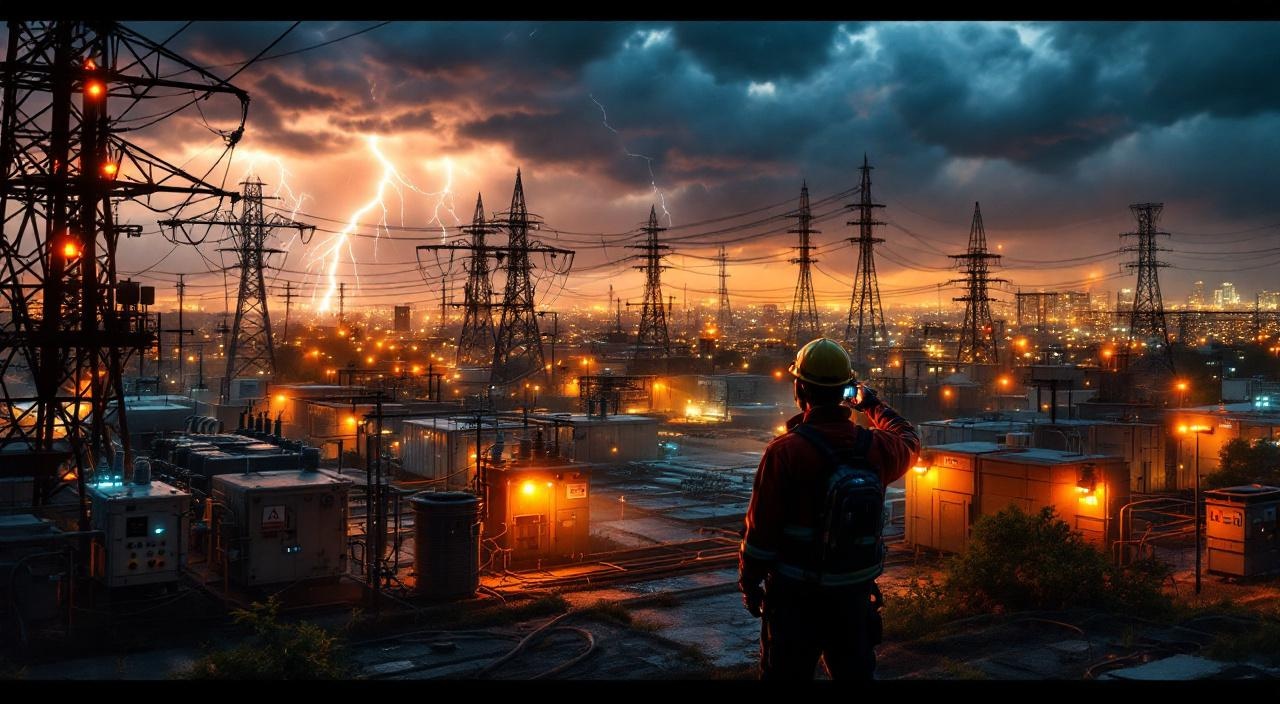
I’ve seen plenty of infrastructure challenges in my decades of business consulting, but AI’s power demands present something unprecedented. Our electricity grid wasn’t built for the sudden surge of 50-500 MW loads that modern AI facilities require.
The Scale of the Challenge
Picture this: data centers already consume enormous amounts of electricity, but AI acceleration pushes these numbers into uncharted territory. Projected data center electricity consumption could reach 6.7-12% of U.S. electricity by 2028. That’s not a typo.
The numbers get more staggering when you consider that 10+ GW of capacity is expected in 2025 alone. Here’s what that means: we’re talking about the equivalent of New York City’s peak demand, just for AI infrastructure.
Infrastructure Reality Check
The interconnection queue delays tell the real story. Power companies scramble to accommodate these massive new loads, but decades-old grid infrastructure can’t adapt overnight. I remember transforming manufacturing operations that required significant power upgrades—but those were measured in kilowatts, not gigawatts.
Grid capacity now determines which regions can support AI growth. Areas with insufficient grid capacity face restrictions on new data center development, creating geographic winners and losers in the AI race.
This bottleneck affects everyone. Electricity prices surge when demand outstrips supply, and reliability suffers when the grid operates near capacity limits.
The AI revolution demands infrastructure revolution. Companies planning AI implementations must factor grid constraints into their strategic decisions, not as an afterthought.
The Clean Energy Challenge
Clean energy sounds like the perfect solution for AI’s massive power demands. But here’s the twist: green power alone won’t solve the problem.
AI data centers need electricity 24/7 without interruption. Your ChatGPT query at 2 AM can’t wait for the wind to blow or the sun to rise. This creates a fundamental mismatch between AI’s constant hunger for power and renewable energy’s natural rhythms.
Why Renewables Fall Short for AI Operations
Solar panels produce zero electricity at night. Wind turbines sit idle during calm periods. Data centers running AI agents can’t simply pause operations when nature doesn’t cooperate.
Power purchase agreements help companies claim renewable energy credits, but they don’t guarantee actual clean electrons reach the data center when needed. Most facilities still rely on fossil fuel backup systems during renewable shortfalls.
Emerging Solutions for Round-the-Clock Clean Power
Smart companies are exploring three breakthrough approaches:
- Small modular reactors (SMRs) promise carbon-free baseload power that runs constantly
- Long-duration battery storage systems can bank renewable energy for later use
- On-site generation combines multiple clean sources for reliable local power
Data center electricity demand is projected to triple, making these solutions more than nice-to-have features.
Companies that crack the code on reliable clean power will gain a massive competitive edge. Entrepreneurs who understand this challenge today position themselves to profit from tomorrow’s energy solutions.
The clean energy puzzle for AI isn’t just about going green. It’s about staying powered up when the stakes are highest.

Sources:
– Rigzone
– Energy Analytics
– Information Technology and Innovation Foundation (ITIF)
– The Daily Economy
– CalMatters
– European Commission Energy